“The GM Cannot Cheat”
Since the earliest days of the tabletop roleplaying game hobby, there has been a distressingly common view that the facilitator of the game is God; an omniscient, omnipotent authority figure with the final say on all matters.
I hate this.
Since the earliest days of the tabletop roleplaying game hobby, there has been a distressingly common view that the facilitator of the game is God; an omniscient, omnipotent authority figure with the final say on all matters. They outrank both the other players and the rules, and everything is subject to their unilateral power. They exert ownership over the game’s narrative and the characters within it—even the ones which ostensibly belong to the players. This is reinforced by many of the titles TTRPGs bestow on this facilitator: Dungeon Master. Game Master. Storyteller.
I hate this.
It frustrates me to no end that the predominant play culture of these games pays lip service to concepts like collaboration, player agency, and “the GM is a player too,” while in the same breath declaring the ultimate supremacy of the game master over the rules, the story, and the other people at the table. Not only is the deification of the GM fundamentally at odds with the central conceit of roleplaying games, I’d also contend that it’s one of the most intimidating barriers to entry to new players. It serves only the egos of established game masters and their perceived right to deny the agency and contributions of other players.
The crystallization of this belief manifests as a punchy little slogan: “the GM cannot cheat.” This is not an imperative against the GM cheating, but rather a bit of Nixonian exceptionalism: “when the GM does it, that means it’s not cheating.” I hear this thrown around whenever I discuss and criticize the use of deceptive GM techniques like fudging dice or hit points without first gaining the consent of the table to do so. Its adherents assert that fundamentally, the GM is not bound by the rules of the game, because they have ultimate authority over the rules of the game. Their word is law. They are the rules. Their power is absolute, and no one may question them. They are empowered to change the rules at any time, for any reason, without the consultation or consent of any other players, and therefore, no rule can ever apply to them. I find this philosophy worrisome at best.
I don’t believe that those who ascribe to this worldview are bad people. Most are probably perfectly lovely GMs who genuinely do care about the people at their tables. It’s just the way they’ve been taught to do things, and they’ve never critically considered the implications. Most even acknowledge that it’s possible for such a GM to abuse their power, or even be “unfair,” though I’ve never been able to ascertain how they consider these behaviors distinct from “cheating.” I even think it would be acceptable (though not personally preferable) to run one’s game like this, as long as the players agreed to the arrangement. The trouble is that so many GMs seem to do this without ever letting their players know. And that is a direct denial of their agency.
If nothing the GM does can be considered cheating, nothing the players do can be considered agential. In fact, it’s arguable that in this circumstance, neither GM nor player is even playing a game at all!
Let’s Define Our Terms: Agency, Games, and Rules
To understand this, we need to understand agency as it pertains to the players of a game as “the ability to make in-game choices which meaningfully affect the imaginary world.” These consequences may or may not be desirable and predictable for the player-agent, but in general we will assume they act with the agencies they are afforded to attempt to predict and produce outcomes they desire. We’ll also use Bernard Suits’ definition of game as “the voluntary attempt to overcome unnecessary obstacles.” These obstacles and the agencies provided to overcome them are the game’s rules.
Rules are the building blocks of games; rules provide for both the obstacles players must overcome, and the options available to them to do so. Let us look at one rule, using the language of Dungeons & Dragons as a lingua franca.
A Complete Circuit of a Rule
When a player character deals damage to a monster, that amount of damage is subtracted from that monster’s hit points. When a monster’s hit points reach zero, it dies.
This rule is a complete circuit. It provides an obstacle: a monster’s hit points, which keep it alive; and a means of overcoming it: reduce those hit points to zero with damage. A player aware of this rule now has a predictable agency for fighting monsters. They know an input of damage results in an output of lower monster hit points, bringing about a change in the game state whereby they may slay that monster. This rule affords players the agency to fight monsters!
Let us now imagine a player who wants to fight monsters. With the above rule in mind, they make choices within the game. When they build their character, they make choices that will help them fight monsters—perhaps even to the detriment of other abilities. When they play this character, they may spend resources to help them fight monsters—buying monster-fighting equipment with in-game wealth, spending time seeking monsters to fight, choosing adventures likely to result in the application of their prowess. And in fights with monsters, they will make choices geared toward their desire—often taking risks and making sacrifices to do so, and spending their precious turns using what options the game allows to fight monsters. This player exercises every agency made available to them in the game concerning the part of the monster-slaying rule’s equation they can control: damage. They can’t control the monster’s hit points; that’s the game master’s purview. But they can control, to some degree, how hard they hit it. Finally they arrive at the critical moment, striking a monster and rolling all the dice they’ve accumulated to damage it, and, hopefully, slay it.
Now let us imagine a GM who believes they cannot cheat. This GM does not believe themselves bound by the monster-slaying rule as the player is. To the player, the rules are a contract; to this GM, they are mere suggestions. This GM controls the hit point side of the equation, and is aware of how much damage is required to slay the monster. The player informs this GM of the damage they are dealing, and it is exactly the amount required. By the rules of the game, the monster is dead. However, the GM does not acknowledge the rules, and instead declines to reduce the monster’s hit points at all. This is, to them, not cheating, and they believe themselves well within their rights to ignore this player’s action. The player’s agency has been completely negated, even if they aren’t aware of it.
In this moment, every choice the player has made up to this point to enact this outcome, from character creation, to within the imaginary world, to those made on their turn in the fight with the monster, has been denied. Their choices have been rendered meaningless, and their action upon the world has no effect or consequence. In fact, if they had instead done nothing on their turn, the game state would be exactly the same. The GM makes it such that all they’ve accomplished is waste their turn.
If the GM is being deceptive, and acting as if they’ve performed the operation that the rules of the game demand, the player may at this point believe their damage did something, but they’ve been handed a toy steering wheel and told they’re driving the car. What they’re actually doing is asking the GM, “can I kill the monster?” And the monster won’t die until the GM decides, “yes.” The GM has stealthily replaced the rule that afforded the player agency with that of “Mother May I?”
This player is no longer actually playing a game. If they were playing a video game, it would be as if their controller had been unplugged. Their in-game avatar may appear to be active, and they may continue to simulate play, inputting commands and watching the events of the game unfold, but their choices and actions are fundamentally disconnected from the actual operations of the game. The GM certainly may have added or substituted unnecessary obstacles, but they are not the ones the player volunteered to overcome.
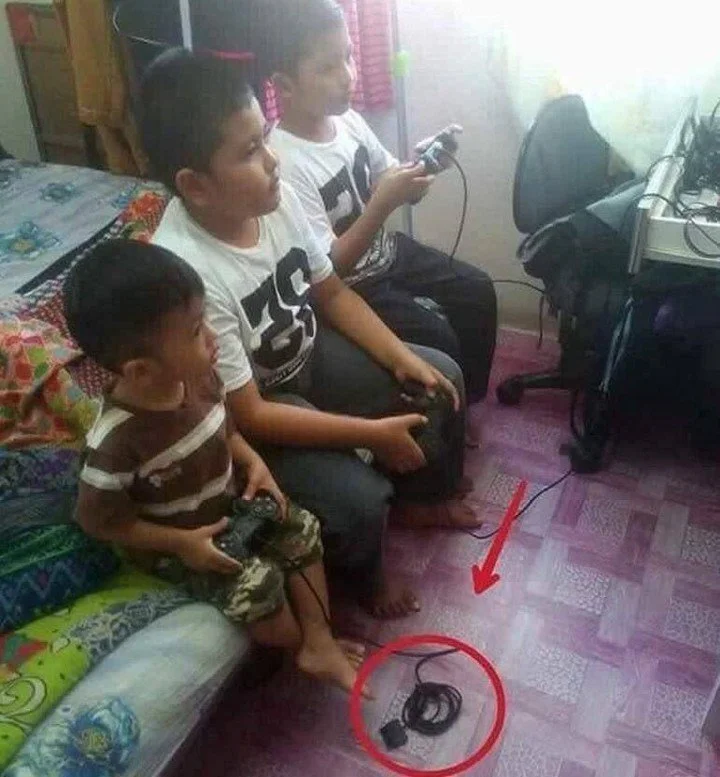
A young player whose brothers are improving his experience by curating his level of agency.
You Can’t Un-Open This Can of Worms
I have no doubt at this point that many who hold the belief that the GM cannot cheat remain unconvinced; after all, this is only one scenario regarding one rule for one specific instance. I would even guess that most of them agree that this hypothetical GM has made an unfair or at least disagreeable ruling. But, crucially, if they believe that this behavior is not a violation of any rules, regardless if they think it’s good or bad, their players still don’t have agency even when the GM chooses not to ignore the rules.
Because they believe it is always their choice whether to apply the rules or not, even in instances where they do adhere to the rules, anything the players do can only occur because this GM allows it. If the option to unilaterally ignore the rules is always a fair and valid choice, the players can never affect the world in any way the GM does not permit.
When players win, it’s because the GM let them win, or chose not to make them lose, or made them win even if, by the rules, they should have lost. When they lose, it’s because the GM decided they should lose, or chose not to let them win, or made them lose, even if, by the rules, they should have won. Even if the GM only abuses their power sparingly, the fact that they can do it at any time taints the entire experience. It casts doubt upon every procedure. The GM has capriciously interposed themselves into the operations of the game so they can manually approve or deny everything that occurs.
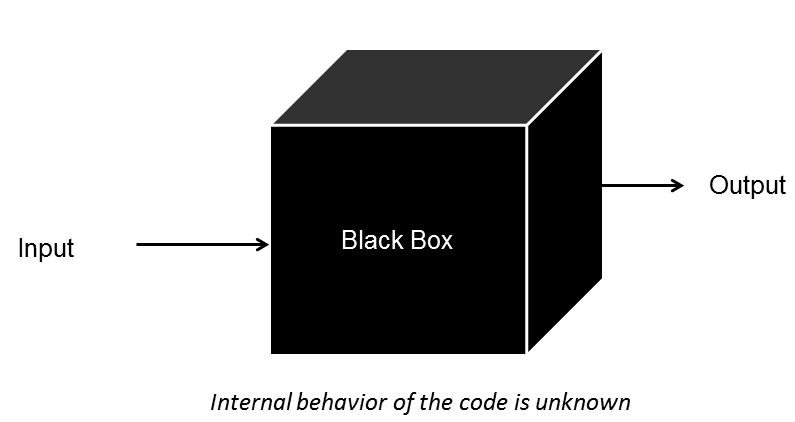
The GM has, with this philosophy, disconnected every rule from its output. They’ve rerouted every agency afforded to the players by the rules away from the obstacles they affect and instead through the arbitrary obstacle of the GM’s whims. They have insinuated themselves as an opaque black box in the circuitry of the game’s mechanics. Perhaps they might consider the rule when delivering an output, but they never feel obligated to. They can’t cheat, after all; the rules aren’t the rules, they, the GM, are the rules.
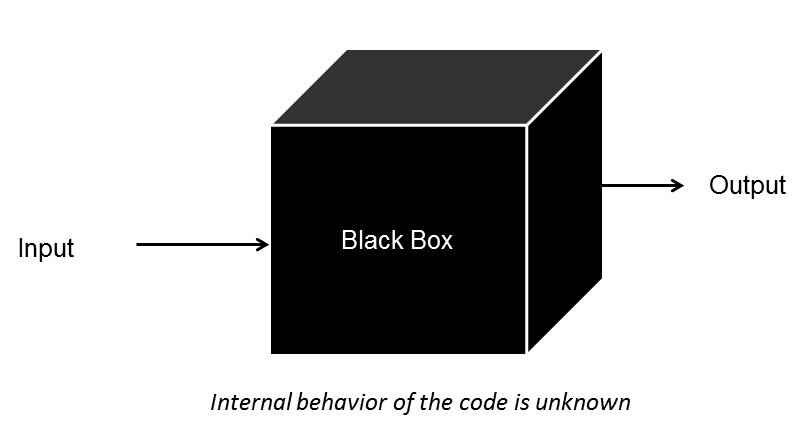
The illustrious and mysterious stylings of the illusionist GM
As a result, players, who are still bound by the rules in this skewed arrangement, cannot reasonably have any idea how their mechanical choices will actually affect the game, because the GM will always simply do whatever they want. Their agencies to produce desirable and predictable outcomes have been entirely replaced by a single person’s judgment, which may only occasionally resemble the rules they remain restricted by. Their choices cannot be meaningful in and of themselves; only subject to the GM’s discretion. They cannot affect the world directly; they may only ask the GM’s permission to do it for them.
In short, the player is bound by the rules, but receives no agency from them. The GM is not bound by the rules and claims unlimited agency, but burdens themselves with becoming the source of all “fun,” through maintaining a charade of a consistent, meaningful, fair, and aesthetic experience of play. It evokes Wilhoit’s Law of conservatism, albeit with much lower stakes.
It’s Not All Their Fault (But Also How to Fix It)
I understand why GMs do this. The predominant play culture surrounding the world’s largest roleplaying game generates certain expectations. It expects GMs to write a story in advance and manipulate the rules of the game to fit it. It expects them to fix the broken and unengaging mechanics of an often poorly designed system on the fly, without revealing that they do so to the other players. It expects that play is a means to produce a product; a television pilot, a curated experience, an actual play podcast, and not an end unto itself. It expects that the entire burden of ensuring an enjoyable game is the GM’s responsibility, and treats the players as passive consumers. It expects this so thoroughly that it literally includes the prerogative to ignore the rules in its own rulebook (thereby ruining this discussion for all time when people cite it like the Bible). But it doesn’t have to be this way.
One easy solution is to discuss it with your table and gain their consent. While I don’t believe GMs are exempt from the rules, I do believe they and their tables are absolutely empowered to create and change rules, so long as all players agree to them. When players actually understand what the GM may do to alter the game, it makes many of the issues with this philosophy go away, even if I personally wouldn’t choose it.
My solution feels even simpler: play the game in front of you, with the people at your table. Allow the things that happen to become the narrative, and discover a story through play. Rather than concerning oneself with what is “supposed to” happen, or what was intended, focus instead on what is happening, and what it could mean. Cultivate a table culture in which players are empowered to use their agency to the fullest. React honestly and naturally to show their impact on the imaginary world. Work together and play together, by the same rules, and marvel at the creativity that blooms under those restrictions. Free yourself from the expectation that the GM is the storyteller, the owner, or the “god” of your game. Be generous with information. Honor the other players’ choices and contributions. Collaborate.
I have often heard the phrase “the GM is a player too” to justify the negation of players’ choices, as if the GM’s enjoyment of play relies on maintaining unquestionable authority over the events of the game and the people at the table. Quite the opposite; treating the GM as a player requires them to acknowledge that they, too, are bound by rules. They, too, have agencies given them by the game, which are fully their toys to play with! Most games load the GM with so much agency that it stuns me when they act as if it somehow isn’t enough!
I think if we stopped treating the GM like a god, and truly started treating them like another player, our hobby would flourish. Not only would the role look less intimidating and easier to take up without the weight of deific expectation, we might also shift the play culture to be more collaborative. Encouraging players to seize their agency, become active participants, and make contributions enhances their experience while simultaneously reducing the workload of the GM, who is no longer responsible for writing and shuttling them through a fully realized campaign to passively consume. They need not take responsibility for being an endless fountain of creative ideas, challenges and fun if they invite and accept the contributions and constraints of the game everyone agreed to play!
We might realize our medium of tabletop roleplaying games is capable of doing more than emulating stories from other media; with it we can explore the uncharted territory of collaborative, real-time, experiential play. With the alchemical combination of rules, choices, and a table full of active imaginations, we can journey to the realm of the unscripted, the undiscovered country of immanence that storytellers cannot even dream of.

Lessons From A Return to Apocalypse World
Apocalypse World cracked my brain open when I first read it many years ago. The text seemed to not only understand what I wanted out of tabletop RPGs, but provide actionable advice to produce it. Now, in preparation for an upcoming game, I’m reading Apocalypse World again and finding it still has clarity to offer me. Perhaps a mere crack in my brain was not enough to truly absorb everything this game expresses; with over a decade of running games under my belt, I feel better equipped to share what I can still stand to learn from the original Power of the Apocalypse.
Apocalypse World cracked my brain open when I first read it many years ago. The text seemed to not only understand what I wanted out of tabletop RPGs, but provide actionable advice to produce it. Now, in preparation for an upcoming game, I’m reading Apocalypse World again and finding it still has clarity to offer me. Perhaps a mere crack in my brain was not enough to truly absorb everything this game expresses; with over a decade of running games under my belt, I feel better equipped to share what I still stand to learn from the original Power of the Apocalypse.
The MC Actually Gets to Be A Player
Apocalypse World’s game master section, “The Master of Ceremonies,” begins thus:
“There are a million ways to GM games; Apocalypse World calls for one way in particular. This chapter is it. Follow these as rules. The whole rest of the game is built on this.”
It is so refreshing to see a game actually treat the Game Master as a player: a participant in the game who is bound by rules, and is afforded the agency to take specific actions. In a world of “rule zero,” “the rule of cool,” and “the GM is god,” giving the facilitator rules instead of guidelines is like water in the desert. This game is not a toy—it is a machine. If you operate it correctly, it will produce a type of play that would be impossible without it.
The scope of the MC’s agency is still tremendous, but not unlimited. They are bound by the agenda and a set of principles, and limited to a set of moves which are versatile but not omnipotent. These are not mere suggestions; they are concrete rules. The entire game flows forth from the MC’s adherence to their structure. This means that the MC of Apocalypse World actually gets to play a game.
The MC isn’t given infinite power and told to go wild. They aren’t told they can change whatever they want for any reason without consulting the rest of the players. They’re actually given an interface of purposeful tools and told “this is what you get to play with.” The same way players get to make choices and moves with their characters, the MC does too. And although they are asymmetric the choices on each side mesh precisely with the choices on the other. I believe this is known in some circles as “good game design.” As the book itself says, “play the game with the players, not against them.”
And even if you do enjoy changing the rules to the game, not only does every rule include an explanation for why it exists, there is an entire chapter dedicated to explaining how to change rules in a way that keeps the game from breaking down. Apocalypse World is a machine, and that means if you know what you’re doing, you can actually get under the hood far more effectively.
A Magnificently Subtle Approach to Incentive
I didn’t understand highlighting stats when I first read this game. For those unfamiliar, highlighting stats is a process by which the MC and another player at the table each choose one of your five stats to “highlight.” Whenever you roll with those stats, you’ll receive an experience point, or XP, five of which allow your character to advance and improve. It seemed like such an odd way to earn experience—until I understood its greater context.
There are a few other ways to earn XP in Apocalypse World; when your history, or “Hx”, which represents how well you know another given player character, would increase beyond a certain threshold, you instead reset it and gain experience. Additionally, when a PC successfully manipulates another PC, they can offer them an experience point if they do what they’re asking.
Hx changes in play at the end of each session, where players each choose another PC they think knows their character better now. It also changes when another PC does harm to yours—you know people better after they hurt you; and when you heal another PC—you know people better when they are vulnerable and in your care.
XP in Apocalypse World comes from your relationship to society, such as it is in the post-apocalypse. Highlighting stats puts external pressure on characters to act a certain way, just like societal pressure. A character with their Hard and Weird stats highlighted might feel drawn to acting Hard and Weird because that’s what society expects them to be. The XP incentive exists to suggest to the player that this character exists in a context, and get them to make choices for their character which may not be rational or “optimal” in a game context, but are in line with what this character understands the world to expect of them. After all, people are not perfectly rational actors, and they do sometimes do things emerging from external pressures on them rather than perfectly logical decision making processes.
Some players dislike having their character thus incentivized, but the game doesn’t force you to roll highlighted stats; it merely exerts pressure on the player in a way that approximates the pressure the character feels to conform to the way the world sees them. If a given player wanted to play a character who rejected that, they could! They just won’t advance as fast. Society does often fail to reward those who don’t match its expectations, after all.
In the same way, offering an experience point for acceding to manipulation represents the fact that the character has desires that we as players do not share. Real life human beings often act in ways that might not be in their best interests. We can be manipulated. We aren’t pawns puppeteered by disconnected observers who perceive our circumstances objectively; we are agents of a lived experience. So the XP serves again as a surrogate for the player of the pressure the character feels; the desire they have to accept the version of reality someone else is offering them. Of course, you could play a character who never succumbs to such tactics, but at the very least, you would be aware that there does exist a reason why you might. Perhaps it might cause such a player to consider what hope or promise their character sees in the manipulation even as they reject it; to understand what they wish were true.
And of course, Hx represents the human drive for community, for trust, for belonging, the desire to know and be known by other people. Like societal pressure and manipulation, receiving XP for knowing and involving yourself in the lives of the people around you allows the player and character to, although for different reasons, mutually feel the desire for closeness even if it might be rationally undesirable.
There are other ways to gain XP scattered throughout the book as well, but I haven’t found one that strays from this paradigm. In fact, I had this epiphany after reading an example from the book of a consequence of a player character opening their brain to the world’s psychic maelstrom and becoming connected to another character. The MC created a new move that would give that PC XP every time he genuinely put that character’s well-being above his own. I thought it was ingenious to represent an external psychic pressure to care deeply about someone in this way—and then I realized that’s what XP was doing everywhere.
Everyone Who Complains About Sex Moves and the Authorial Voice is a Big Fucking Baby
This brings me to sex moves, which are actually very good, despite the innumerable criticisms I’ve read over the years that they are somehow immature, lewd, or pornographic. Honestly, most of these criticisms can be instantly dismissed, as the actual text of the sex moves and the rules for their application are incredibly tame and thoughtful. I think people are literally just scared of the word “sex,” as they are of the text of Apocalypse World occasionally using the word “fuck.”
Sex moves are special moves unique to each playbook that trigger when a player character has sex with another player character. Some, but not all, also trigger when the character has sex with an NPC. Sex moves do not require (nor forbid) players to narrate or play out any part of the characters’ sexual encounter, and they cannot happen without both players’ consent.
Sex moves, and their prominent display near the middle of the character sheet, also serve as a reminder to the player that their character experiences physical desire. Their sexuality is a part of them worth considering. Even in the apocalypse, people will desire physical intimacy, and this game, as established, is deeply concerned with relationships between people. It is cool to have a game mechanic to express that sex can and will change a dynamic between two people, and that different characters have different relationships to sex.
Much like all the sources of XP, sex moves affect the player in a way that simulates their effect on the character. Even if the player has no desire to have their character have sex, the ever-present sex move can remind them that their character might! And it might demonstrate the way that character regards their desire for physical intimacy: as a tool, as an obligation, as a service, as just another thing to do.
And if you really don’t like them, or you want to play an ace character, you can ignore them. You can cross them out. You can replace the word “sex” with “absolute vulnerability” or whatever. But in my opinion, you’re missing out.
Conclusion
This post ended up longer than I initially planned, because I also wanted to talk about the versatility of the basic moves and their varied levels of threat, the fact that this game can absolutely be played tactically, even though it’s often written off as a “storygame,” and how I feel the distance between PbtA and OSR is often a lot smaller than both camps think. But all that for another time, perhaps.
Apocalypse World is tightly designed to produce interesting systems of relationship and conflict between player characters and NPCs. It operates on its players as well as its characters in a way that models the pressures and operations of societies. It invites players to consider external forces beyond their own puppeteering hand on their precious characters, and gives the GM clear, concrete, and actionable tools to play those forces.
It is a game that acknowledges and loves humanity explicitly for its messiness, and yet itself is a well-oiled machine that produces interesting messes. If you haven’t read it, you owe it to yourself.